


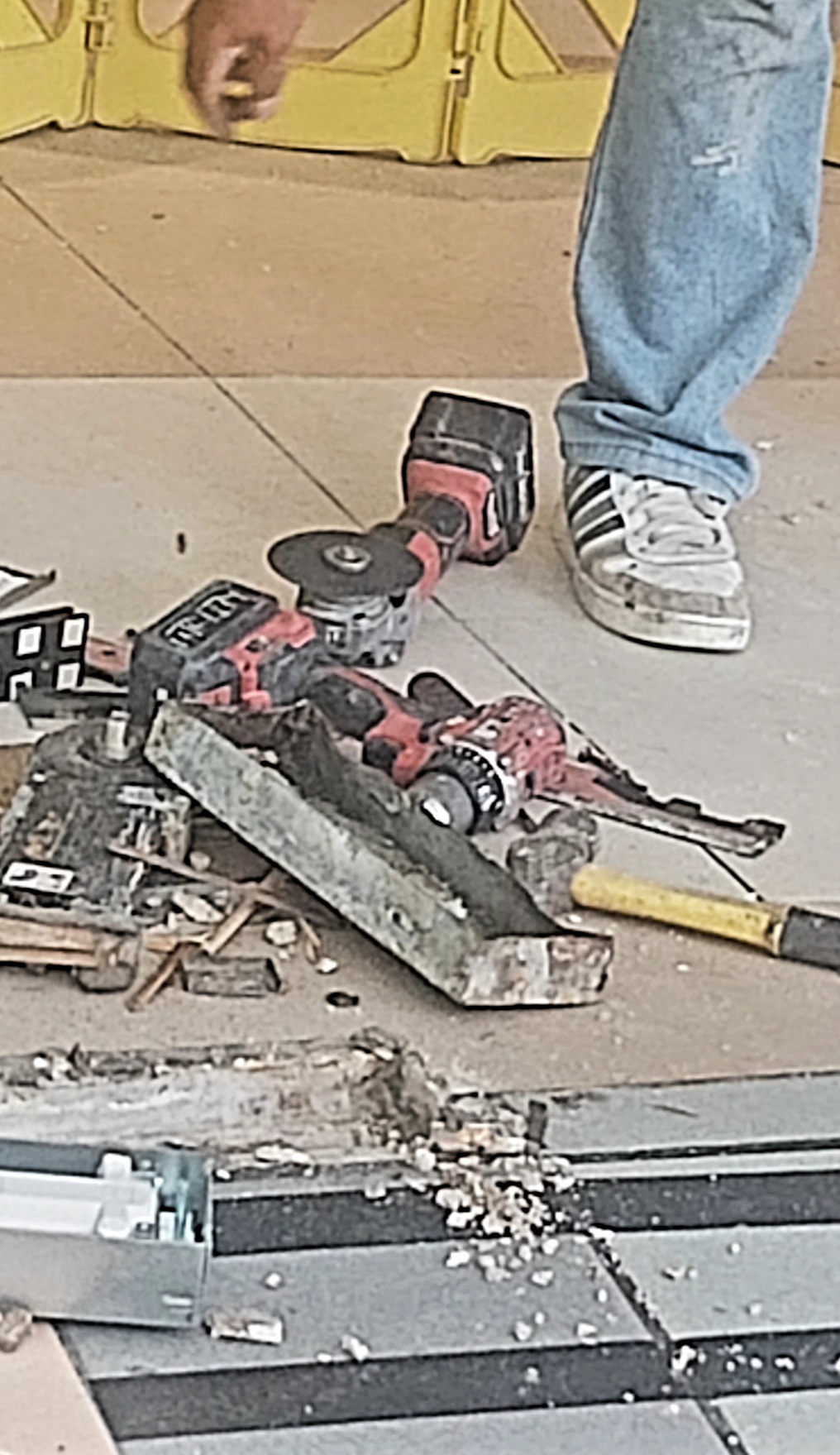
 Photo par Waydwaid via Wikimedia (CC CC0 1.0)
Finding affordable professional tools is a recurring challenge for tradespeople, maintenance managers and SME buyers. The temptation to go for the lowest price is strong, but it can be costly in the long run: frequent breakdowns, non-existent after-sales service, batteries incompatible with the rest of the equipment pool. This guide reviews which brands to choose by budget, the most cost-effective purchasing channels, and the criteria that separate a good deal from a false economy.
Why Do Professional Tools Cost More Than Consumer Grade?
The price gap between a professional tool and its consumer equivalent is not purely down to marketing. Several technical differences justify a higher investment.
Brushless motors. Brushless motors in professional ranges offer significantly better energy efficiency and a lifespan two to three times longer than brushed motors. On a drill-driver used daily, the return on investment can be calculated within a few months.
Enclosure robustness. IP 54 or IP 67 protection ratings and drop resistance certifications define how a tool holds up under real site conditions: concrete dust, water splashes, accidental drops. Consumer tools are not designed for these constraints.
Battery compatibility. The 18 V, 36 V and 54 V platforms within a single brand allow multiple tools to run off the same battery range. A professional who invests in the Makita LXT or Milwaukee M18 platform spreads the investment across the entire tool fleet.
After-sales service and spare parts. A professional tool from an established brand is repairable over time. Major manufacturers commit to spare parts availability for 5 to 10 years after a model is discontinued.
The price difference typically amortises over 12 to 24 months of intensive use. Below 8 hours of weekly use, some mid-range tools may suffice for less demanding applications.
Brand Comparison by Budget
Four major brands on the French professional market are Makita, Milwaukee, DeWalt and Bosch Professional. Each occupies a different position in terms of price, power and use case.
| Brand | Price segment | Strengths | Best use case |
|---|---|---|---|
| Makita | Mid-range | Lightweight, extensive LXT 18 V range, proven durability | Construction, carpentry, finishing |
| Milwaukee | Premium | Maximum power, M18/M12 platform breadth, constant innovation | Plumbing, electrical, industry |
| DeWalt | Mid-to-high | Robustness in extreme conditions, XR 18/54 V range | Structural works, civil engineering, offshore |
| Bosch Professional | Affordable to mid | Value for money, dense service network in Europe, versatile 18 V | Multi-trade, general artisans, SMEs |
Several alternatives deserve attention for tighter budgets. Metabo stands out in cutting and grinding. Hikoki (formerly Hitachi) offers impact drills and angle grinders at attractive prices, in a segment close to that of Makita. AEG shares its 18 V battery platform with Milwaukee and Ryobi, which delivers notable savings on the battery pool.
Where to Buy Affordable Professional Tools?
The purchasing channel has as much impact on the final price as the brand choice. Several options are available to professionals depending on purchase volume and desired responsiveness.
Specialist Online Distributors
Specialist online distributors offer prices negotiated directly with manufacturers, often 15 to 25% below the recommended retail price. Their catalogues cover the major brands with stock held locally, guaranteeing delivery times of 24 to 48 hours. Opening a professional account typically unlocks additional discounts based on annual purchase volume.
Clearance and Refurbished Platforms
Online clearance operators offer showroom lots, end-of-range items and refurbished products at discounts of 40 to 60% off the catalogue price. These deals suit professionals able to anticipate their needs two to three months ahead, but availability is unpredictable and stock is limited.
Trade Distributors and Group Purchasing
An account with a trade distributor such as Rexel, Sonepar or Würth gives access to volume-tiered pricing, often unavailable to consumers. Some craft trade associations negotiate collective framework agreements with additional discounts of 5 to 15%.
For companies managing a tool fleet, a maintenance management software helps track service intervals, optimise total cost of ownership and plan renewals based on actual wear rather than fixed schedules.
Clearance and Refurbished: How Reliable Are They for Professional Use?
The refurbished market has matured with the emergence of manufacturer-approved refurbishers. Makita Certified Refurbished, Bosch Outlet and DeWalt Certified offer factory-serviced tools with a manufacturer warranty of 6 months to 1 year. These ranges represent a solid compromise for organisations wanting quality equipment at a reduced price.
Key criteria to check before any refurbished purchase:
- Minimum 6-month warranty covering parts and labour, ideally issued by the manufacturer or an approved refurbisher
- Intervention traceability: inspection report or service sheet available at time of order
- Battery health: Li-Ion cells degrade with charge cycles. Require a residual capacity above 70% of original for a refurbished battery
- Parts availability: verify that the refurbished model is still supported by the manufacturer
Lots without technical documentation or warranty, sold on general marketplaces, carry high risk for professional intensive use and should not equip a worksite with regulatory safety obligations.
Cutting Costs Without Compromising Safety
Saving on tooling should not come at the expense of operator protection. Several levers allow cost control while meeting regulatory requirements.
Standardise battery platforms. Concentrating purchases on a single 18 V platform (Makita LXT, Bosch 18 V, Milwaukee M18) reduces the number of chargers and batteries held in stock. A versatile 18 V 5 Ah battery can power ten different tools within the same range, delivering a 30 to 50% saving on the battery budget.
Maintain to extend service life. Regular maintenance (dust filter cleaning, brush inspection on brushed models, percussion mechanism lubrication) doubles the lifespan of intensively used power tools. Schedule an annual service for tools used more than 4 hours per day.
Buy in kits. A drill-driver kit with matched accessories typically costs 15 to 25% less than purchasing the same references separately. Starter kits generally include two batteries and a charger, avoiding an additional purchase.
Pair tools with the right personal protective equipment. Each type of tooling requires PPE compliant with applicable EN standards (eye protection, hearing protection, anti-vibration gloves for heavy hammers). Operator safety cannot be negotiated against the tool budget.
For inspection and measurement tasks, the industrial measuring instruments comparison on this site covers professional-grade meters and sensors without overpaying.
Frequently Asked Questions
What are the best professional tool brands?
For professionals, Makita, Milwaukee, DeWalt and Bosch Professional are four major brands. Each stands out in its own way: Makita for durability and lightweight design, Milwaukee for power and battery innovation, DeWalt for robustness in extreme conditions, Bosch Professional for value for money and a dense service network across Europe.
What are the top 3 tool brands?
Milwaukee (power and reliability in industry and plumbing), Makita (lightweight and versatility on construction sites), DeWalt (robustness in harsh conditions and civil works) and Bosch Professional (dense after-sales service coverage across Europe) are among the brands most recommended by professionals, each with its own strengths.
Which website offers the cheapest professional tools?
For professional tools at the best price, specialized online distributors typically offer negotiated rates 15 to 25% below the recommended retail price. Clearance platforms and certified refurbishers can reach discounts of 40 to 60% on end-of-range products and certified refurbished items. Always verify warranty terms before purchasing.
Is refurbished equipment reliable for professional use?
A tool refurbished by the manufacturer or an authorized refurbisher remains reliable for professional use, provided you verify the warranty (minimum 6 months), battery health (residual capacity above 70% of original) and traceability of interventions. Lots without technical documentation or warranty carry high risk for intensive on-site use.