


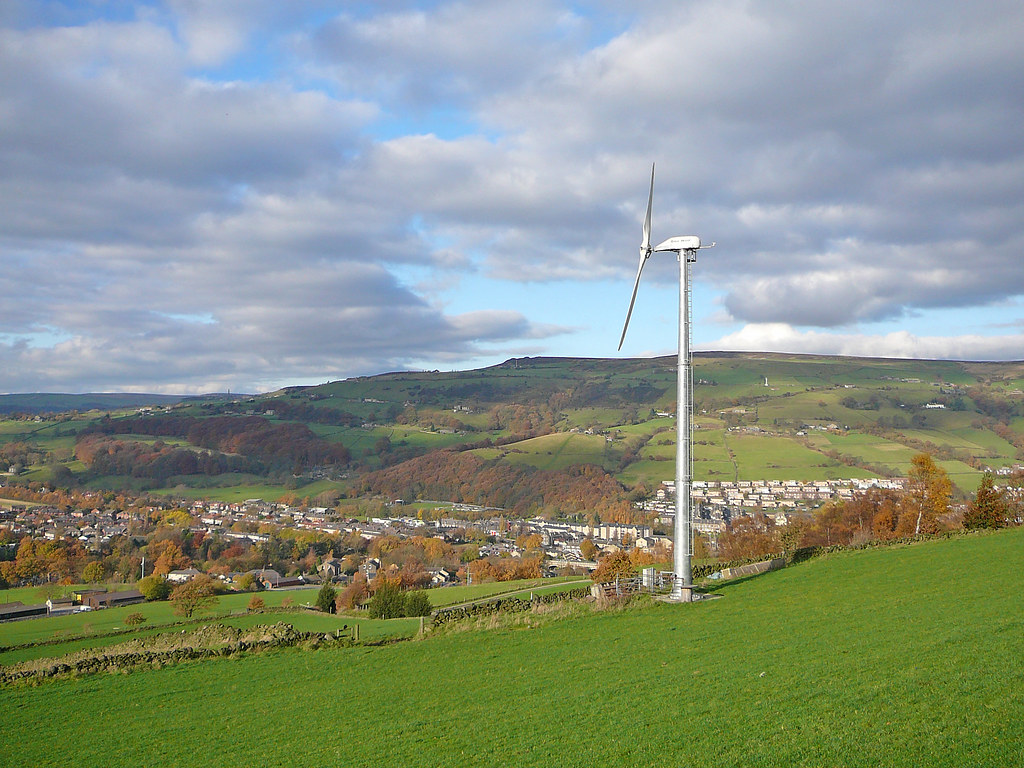
 Photo par Tim Green aka atoach via Flickr (CC BY 2.0)
Key points:
- Rigzone and Energy Jobline dominate the specialized energy job boards, with Rigzone’s 15,000 active postings and Energy Jobline’s 200,000 annual placements across global energy markets.
- The global renewable energy sector employs 13.7 million people in 2023 according to IRENA, with projections reaching 40 million by 2030 under the 1.5°C pathway.
- The US hosts 3.5 million clean energy jobs per DOE 2024, with solar installers and wind turbine technicians among the fastest-growing occupations.
- Median energy engineer salaries reach 108,200 dollars in the US and 42,000 euros in France entry-level, with a 8 to 15 percent premium for nuclear and major project profiles.
Overview of the global energy job market in 2026
The global energy sector is undergoing the most profound transformation in its history, driven by the Paris Agreement targets, the US Inflation Reduction Act (370 billion dollars in clean energy investment), the European Green Deal, and the six EPR2 reactors decided by France. These dynamics create sustained demand for engineering and technical talent across renewable energy, nuclear, grid modernization, energy storage and hydrogen.
The best job boards in the energy sector fall into three families: institutional portals (IRENA, IEA, DOE Careers), sector-specialized platforms (Rigzone, Energy Jobline, Renewable Energy Jobs), major utility careers pages and generalists with sector filters. Search strategy varies significantly depending on whether candidates target oil and gas, renewables, nuclear or grid operations.
A sector in rapid growth
IRENA’s Renewable Energy and Jobs 2024 report counts 13.7 million jobs in renewable energy globally in 2023, up from 12.7 million in 2022 and 11.5 million in 2021. Solar PV alone accounts for 7.1 million jobs worldwide, with China hosting 4.5 million. Wind employs 1.4 million globally, hydropower 2.3 million and biofuels 2.5 million.
Traditional oil and gas maintains significant employment, with 8 million direct jobs globally per IEA 2024, though trending downward in OECD countries while growing in emerging markets. Nuclear employs 1.2 million directly worldwide, with a rebound expected from the SMR rollout, France’s EPR2 program and extensions of existing fleets in the US and Asia.
Major utility and energy company careers pages
Global energy majors operate sophisticated career portals. They concentrate the bulk of technical recruitment, particularly for experienced engineers.
European integrated utilities
The most active energy recruiters in Europe in 2026 are:
- EDF Group: 165,000 employees, 15,000 annual hires in France alone, strong nuclear expansion
- Engie: 95,000 employees, 5,000 annual hires, ENR and energy services focus
- TotalEnergies: 100,000 employees, 3,000 annual hires, pivoting to ENR and biofuels
- Iberdrola (Spain): 42,000 employees, 3,500 annual hires, global renewables leader
- Enel (Italy): 65,000 employees, 5,500 annual hires, grid and renewables
- RWE (Germany): 20,000 employees, 2,000 annual hires, offshore wind specialist
- Ørsted (Denmark): 8,000 employees, 1,200 annual hires, offshore wind pure play
US and global majors
- NextEra Energy: 15,000 employees, 1,500 annual hires, largest US renewables owner
- Duke Energy: 27,000 employees, 2,200 annual hires, nuclear and grid modernization
- Southern Company: 28,000 employees, 2,300 annual hires, nuclear expansion with Vogtle
- Exelon: 19,000 employees, 1,600 annual hires, utilities and nuclear
- Shell: 103,000 employees globally, 8,500 annual hires, LNG and new energies transition
- BP: 87,000 employees, 7,000 annual hires, ENR focus
- Equinor: 23,000 employees, 1,800 annual hires, offshore wind specialist
For profiles combining engineering with project management expertise, the certifications presented in our project management certifications comparison are especially valuable on major energy projects.
Specialized energy job platforms
Several platforms focus exclusively on energy sector roles, with qualified postings and subject-matter expertise.
Rigzone and oil and gas specialists
Rigzone is the leading specialized platform for oil and gas jobs, with 15,000 active postings and 2.5 million registered professionals. The site covers upstream (exploration, drilling), midstream (pipelines, LNG) and downstream (refining, petrochemicals) with global geographical coverage. Rigzone also publishes industry news and salary surveys.
OilCareers.com aggregates 10,000+ active oil and gas positions with a European focus. Petroleum Jobs and OilandGasJobSearch.com complete the specialized oil and gas landscape. For offshore and maritime energy roles, SeaJobs and Maritime-Executive Jobs serve the niche.
Renewable energy and cleantech
Renewable Energy Jobs is a leading specialist platform with around 8,000 active postings across solar, wind, hydrogen and energy storage. GreenJobs.co.uk covers the UK sustainability market with approximately 2,500 active positions. CleanTech Jobs and Sustainable Business Jobs target the broader cleantech ecosystem including energy storage, electric vehicles and smart grids.
IRENA Careers publishes positions at the International Renewable Energy Agency (IRENA) based in Abu Dhabi, with approximately 100 annual openings across policy, technical and operational roles. IEA Careers (International Energy Agency, Paris) offers similar opportunities for energy policy experts.
Hydrogen and nuclear specialists
Hydrogen Europe Jobs is the career portal of the European hydrogen industry association with 500+ members. It publishes 200+ annual positions in electrolysis, fuel cells and hydrogen infrastructure. Nuclear Jobs and POWER Engineering Jobs cover nuclear power and thermal generation. World Nuclear Association Careers publishes international nuclear opportunities.
For engineering profiles targeting technical documentation roles in complex energy projects, the best practices presented in our guide on how to create technical documentation are particularly relevant.
Comparison of main energy platforms
The following table summarizes platform strengths by candidate profile.
| Platform | Positioning | Volume | Key strength |
|---|---|---|---|
| Rigzone | Oil and gas | 15,000 active | Global O&G reference |
| Energy Jobline | Multi-segment | 200,000/year | Global aggregator |
| Renewable Energy Jobs | ENR specialist | 8,000 active | Solar, wind, hydrogen |
| Hydrogen Europe Jobs | H2 industry | 200+/year | Growing sector |
| IRENA Careers | Global policy | 100/year | Strategic roles |
| IEA Careers | Energy policy | Limited | Prestigious roles |
| EDF Careers | Nuclear, ENR, grids | 15,000 hires | EPR2, French nuclear |
| NextEra Careers | US renewables | 1,500 hires | Largest US ENR owner |
| Direct sourcing | Not disclosed | Majors, executive | |
| Indeed | Volume aggregator | 25M+ active | All tiers |
How to optimize an energy sector job search
The energy sector has strong specificities requiring a segment-focused approach. Studies show that candidates combining at least three channels triple their conversion rates.
“In energy transition, 45 percent of management hires come through corporate careers pages of major utilities, 30 percent via sector portals and 18 percent through cross-industry referrals.” — IRENA Renewable Energy and Jobs Report, 2024
Segment-based search strategy
- Identify two to three target segments (nuclear in France and UK SMR, offshore wind in North Sea, solar in Spain and Southwest US, hydrogen in Germany and Netherlands)
- Build optimized profiles on utility careers pages, sector syndicates (Hydrogen Europe, Solar Power Europe, WindEurope) and LinkedIn with precise technical keywords
- Follow sector publications (Platts Energy, Reuters Energy, POWER Magazine, reNews) to spot fast-growing companies
- Highlight specialized competencies (nuclear licensing, ISO 50001, low-carbon expertise, thermodynamic modelling)
- Attend specialist events (World Nuclear Exhibition, WindEurope Annual, SNEC PV Expo, Hydrogen Expo), which host 20,000 to 30,000 professional visitors each
In-demand roles and valued certifications
The most sought-after energy roles in 2026 are:
- Renewable energy engineer (solar PV, wind): 4,500 annual openings in France, salary 65,000 to 95,000 dollars US
- EPC project manager hydrogen: 800 roles, salary 100,000 to 160,000 dollars
- Grid engineer (TSO/DSO): 1,200 roles, salary 85,000 to 120,000 dollars
- Nuclear expert (reactor physics, thermohydraulics, safety): 2,500 roles, salary 90,000 to 140,000 dollars
- Energy efficiency engineer (buildings, industry): 3,000 roles, salary 70,000 to 105,000 dollars
- Energy storage specialist: 1,000 roles, salary 90,000 to 135,000 dollars
Valued certifications include nuclear licensing (CSQ/HN2 France, NRC Reactor Operator US), ISO 50001 energy management, RGE labels for building renovation, PMP for major infrastructure projects, and Project Finance certifications for EPC roles. Profiles combining energy expertise with transversal skills detailed in our best engineering job boards comparison gain significant differentiation in the market.
Frequently asked questions
What are the best job boards in the energy sector?
The best job boards in the energy sector combine specialized platforms and major utility careers pages. Rigzone leads the oil and gas market with 15,000 active postings. Energy Jobline aggregates 200,000 global energy jobs per year. Renewable Energy Jobs, Green Jobs and CleanTech Jobs specialize in ENR. Major utility careers pages (EDF, Engie, TotalEnergies, Shell, BP, Iberdrola, Enel, NextEra) and IRENA Careers for renewable energy policy complement the landscape.
Which energy transition jobs are in demand?
The most sought-after roles are renewable energy engineer (solar, wind, hydrogen), EPC project manager, grid engineer, nuclear expert, energy efficiency engineer and energy storage specialist. IRENA projects 40 million jobs in global renewable energy by 2030, a doubling from 2024. In the US, BLS projects 120,000 new wind turbine technician and solar installer jobs per year. Tension on hiring remains strong, with 65 percent of projects considered difficult to fill.
What is the salary in the energy sector?
The median salary for an engineer in the US energy sector was 108,200 dollars per year in 2024 according to US BLS, with petroleum engineers at 135,690 dollars. In France, entry-level energy engineers earn 42,000 euros, with an 8 to 15 percent premium for nuclear specialists. Experienced EPC project managers command 120,000 to 180,000 dollars in renewable energy, and nuclear plant managers exceed 200,000 dollars. The sector ranks among the highest-paying in engineering.
How to enter the nuclear industry?
The nuclear industry primarily recruits through major utility careers pages like EDF (15,000 annual hires in France), Westinghouse, Framatome, Orano, Rolls-Royce SMR and Cameco. Engineering schools like MIT, University of Michigan, Grenoble INP-Phelma and INSTN Saclay are the traditional feeders. France’s EPR2 program plans 10,000 net hires over the decade, while the US Inflation Reduction Act drives small modular reactor (SMR) development with 5,000 projected new roles.
How many jobs in global renewable energy?
The global renewable energy sector employed 13.7 million people in 2023 according to IRENA’s Renewable Energy and Jobs 2024 report, and is projected to reach 40 million jobs by 2030 under the 1.5°C scenario. Solar PV leads with 7.1 million jobs globally, wind employs 1.4 million and biofuels 2.5 million. The United States hosts 3.5 million clean energy jobs per DOE 2024, and the European Union 2.2 million. Growth rates exceed 15 percent annually in most segments.