


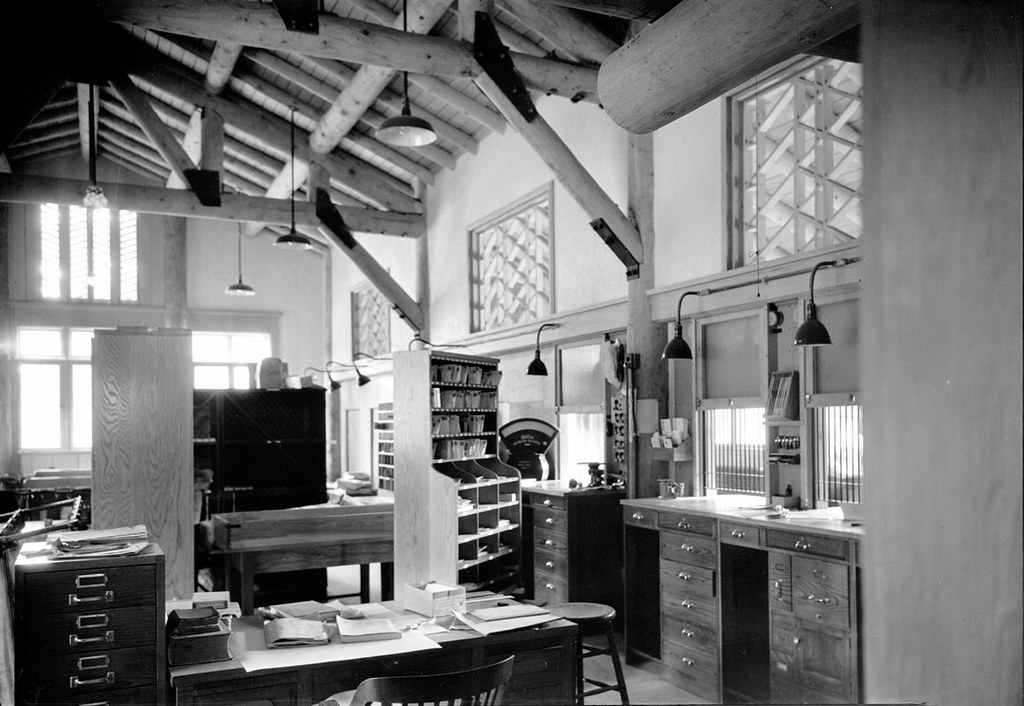
 Photo par Grand Canyon NPS via Flickr (CC BY 2.0)
Open-plan offices now account for the majority of professional workspaces in France and across Europe. When well designed, this format encourages collaboration, reduces cost per workstation, and signals a modern management culture. When poorly planned, it generates noise, distraction, and measurable productivity losses. Designing an effective open-plan office requires a structured approach — here are the seven key rules to follow.
Why open-plan office design determines collective performance
An open-plan office is not simply a floor without partitions. It is a shared working environment that directly influences concentration, communication, and employee well-being. Research consistently shows that workers in open spaces are interrupted on average every 11 minutes, and that it takes nearly 23 minutes to regain full focus after an interruption.
The challenge of office design is therefore twofold: enabling the spontaneous exchanges that make open-plan offices valuable, while preserving areas for focused individual work. This apparent contradiction is resolved through careful functional zoning planned before any furniture is ordered.
Assess the space before starting: surface area, flow and constraints
Before selecting a single piece of furniture, a detailed site analysis is essential. This phase determines every subsequent decision.
Dimensional survey: measure the floor plate dimensions and identify load-bearing columns, technical ducts, and access points to utilities (electrical sockets, fibre, air conditioning). These constraints define the non-usable zones.
Capacity calculation: apply regulatory requirements to determine the maximum number of workstations. A 200 m² floor plate can accommodate between 20 and 28 workers depending on the chosen configuration.
Flow analysis: map daily movement patterns (access to meeting rooms, printers, kitchen, toilets). Circulation corridors must remain clear to meet evacuation requirements, with a minimum clear width of 0.90 m per passage.
Natural light audit: note the orientation of glazed facades and shadow zones throughout the day. The goal is to position bench workstations as close as possible to natural light sources.
For mixed office-workshop environments, it is also necessary to identify zones where PPE and industrial safety equipment may be required depending on the activities carried out nearby.
Define functional zones adapted to working styles
The golden rule of open-plan office design is zoning: dividing the floor plate into areas dedicated to different uses, without necessarily erecting full-height partitions.
| Zone | Primary use | Share of floor plate |
|---|---|---|
| Bench workstations | Nominal desks, focused work | 60 to 70 % |
| Collaborative zone | Informal meetings, whiteboards | 10 to 15 % |
| Privacy pod | Calls, interviews, deep focus | 5 to 10 % |
| Breakout and coffee area | Breaks, informal conversations | 5 to 10 % |
| Storage and printers | Shared equipment | 5 % |
Team allocation should follow a business unit logic: grouping together colleagues who work in daily synergy — sales with pre-sales, technical teams with support — reduces unnecessary movement and strengthens team cohesion.
Planning an office fit-out project that involves multiple trades (electrical, networking, furniture, relocation) is significantly easier with a project management software suited to cross-functional teams.
Choose ergonomic and modular furniture for your open-plan office
Furniture selection is critical for daily comfort and the long-term sustainability of the fit-out. For open-plan workstations, three criteria take priority.
Ergonomics: each workstation must comply with European Directive 90/270/EEC on display screen equipment. In practice: height-adjustable desks (sit-stand for extended use), chairs meeting EN 1335, and monitors positioned at eye level at a distance of 50 to 70 cm.
Modularity: opt for modular bench systems whose length and depth can be adapted as headcount changes. A standard configuration allocates 140 cm of width by 80 cm of depth per workstation. T-shaped or L-shaped bench clusters create natural team islands for groups of 4 to 8 people.
Dividers: low desktop screens fitted at 60 to 80 cm height delineate visual fields without providing acoustic isolation. Effective noise reduction requires combining bench dividers with wall-mounted acoustic panels.
A detailed guide to selecting professional office furniture covers applicable standards, budget ranges per workstation, and sustainability criteria to consider.
Managing acoustics: the main challenge in open-plan offices
Noise is the leading source of dissatisfaction in open-plan offices. Sound pressure levels above 55 dB(A) significantly impair concentration. An untreated floor plate can easily reach 65 to 70 dB(A) during peak activity.
Acoustic solutions work best when layered across multiple surfaces and elements.
Ceiling treatment: mineral ceiling tiles with an absorption coefficient alpha of 0.85 or higher reduce reverberation. Suspended acoustic baffles and islands provide additional correction in spaces with high ceiling heights.
Wall treatment: panels made of melamine foam or recycled polyester mounted on perimeter walls and partitions. Target a noise reduction coefficient (NRC) of 0.80 or above for measurable effectiveness.
Absorbent furniture: filled bookshelves, dense-fabric sofas, indoor plants. These elements help break sound reflections without requiring structural works.
Bench acoustic screens: desktop dividers positioned between workstations (height 40 to 60 cm, filled with rock wool or cellular foam) attenuate direct sound transmission between adjacent colleagues.
Focus pods: for calls and high-concentration tasks, closed acoustic pods should be provided at a ratio of approximately one pod per 8 to 10 employees.
Optimise natural and artificial light
Light affects visual health, circadian rhythm, and team mood. Standard EN 12464-1 sets the minimum illuminance level at 500 lux on working surfaces in offices.
Natural light: position bench workstations perpendicular to glazed facades to avoid direct glare and screen reflections. The effective penetration depth of natural light is estimated at 2 to 2.5 times the window height.
Artificial lighting: specify LED luminaires at a neutral colour temperature (4,000 K) with an efficacy above 100 lm/W. DALI control systems allow zone-by-zone dimming in response to available natural light.
Dark zones: workstations far from facades need supplementary lighting. Avoid directional spotlights on work surfaces, which cause glare. Prefer diffuse opal-diffuser luminaires or directional LED desk lamps.
Biophilic elements: indoor plants regulate humidity, contribute to psychological well-being, and serve as a soft zoning tool to define areas without partitions.
Know the regulatory requirements for open-plan offices
Fitting out an open-plan office in France is governed by several texts that project managers must master before starting.
Floor area per occupant: Article R. 4214-22 of the French Labour Code sets a minimum of 11 m² per person for collective open offices. This area is calculated on the gross floor volume of the space.
Aisle widths: clearances must measure at least 0.80 m of free width for standard passages and 1.20 m for main aisles used regularly by multiple people.
Ventilation and temperature: the minimum fresh air flow rate is 25 m³/h per occupant. The recommended thermal comfort range is 20 to 22 °C in cold weather and 24 to 26 °C in warm weather.
Accessibility for people with disabilities: offices open to the public must comply with the requirements of the Law of 11 February 2005, including minimum passage widths (0.90 m) and accessible workstation heights.
Planning consent: the installation of permanent partitions that alter the surface area or volume of existing premises may require prior declaration to local authorities, depending on the municipality and the extent of the works.
Frequently asked questions
How do you organise an open-plan office effectively?
An effective open-plan office relies on defining distinct zones for different activities: bench workstations, collaboration areas, privacy pods, and breakout spaces. Grouping teams by business unit reduces unnecessary movement and encourages spontaneous exchanges.
What are the disadvantages of an open-plan office?
The main drawbacks are noise, lack of privacy, and difficulty concentrating. These issues can be addressed with acoustic solutions (movable partitions, sound-absorbing panels), closed focus pods, and a collective code of conduct for the workspace.
What is the minimum space required per person in an open-plan office?
French regulations set a minimum of 11 m² per occupant (Article R. 4214-22 of the Labour Code). In practice, office designers recommend between 7 and 10 m² of net working area per workstation, excluding circulation aisles, meeting rooms, and shared spaces.
What is the most common layout for a team of 4 to 6 people?
For teams of 4 to 6, the bench configuration (long table in a face-to-face or side-by-side layout) is the most popular. It optimises floor space, facilitates communication, and allows acoustic separators to be fitted between workstations without fully closing off the space.